


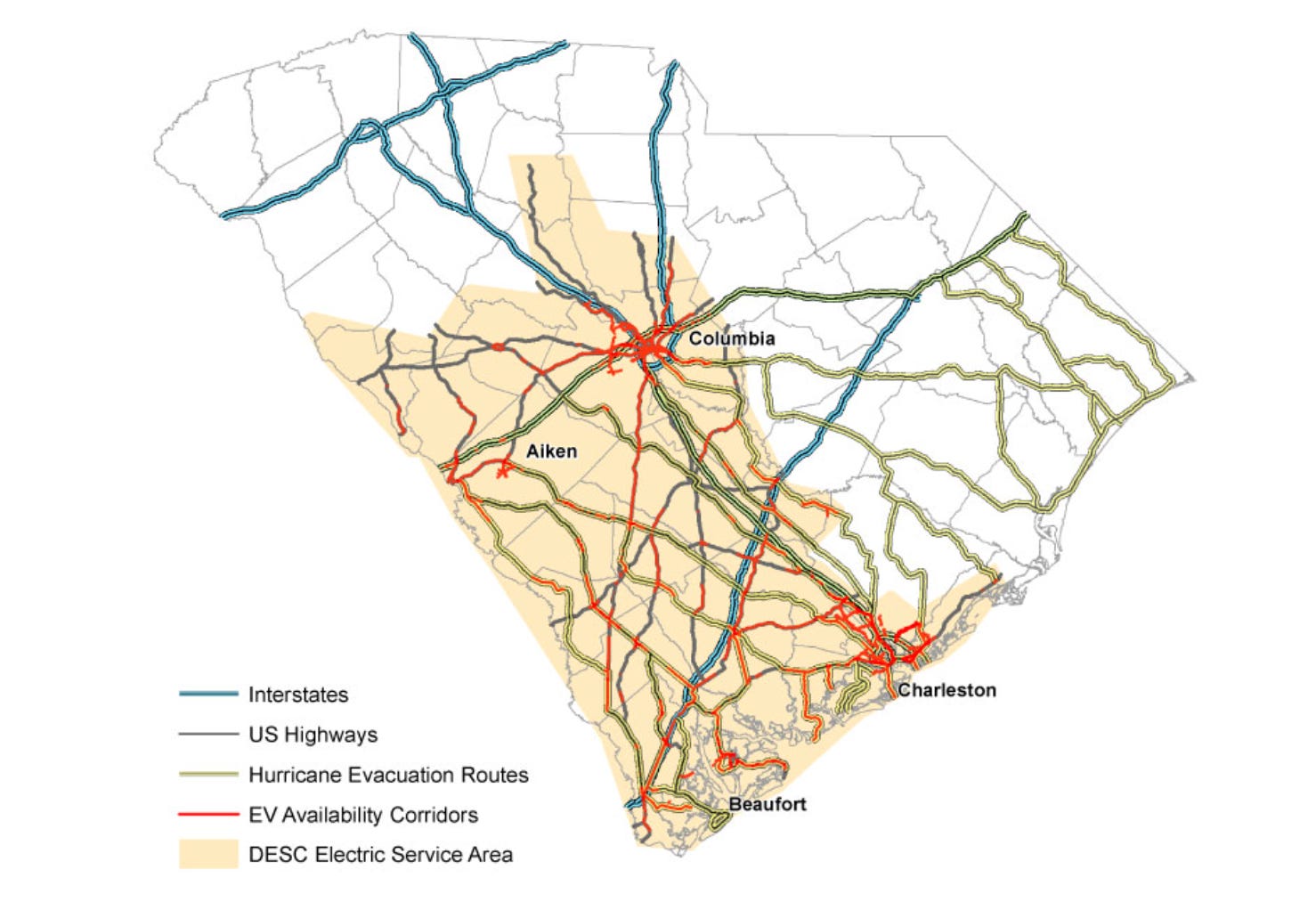
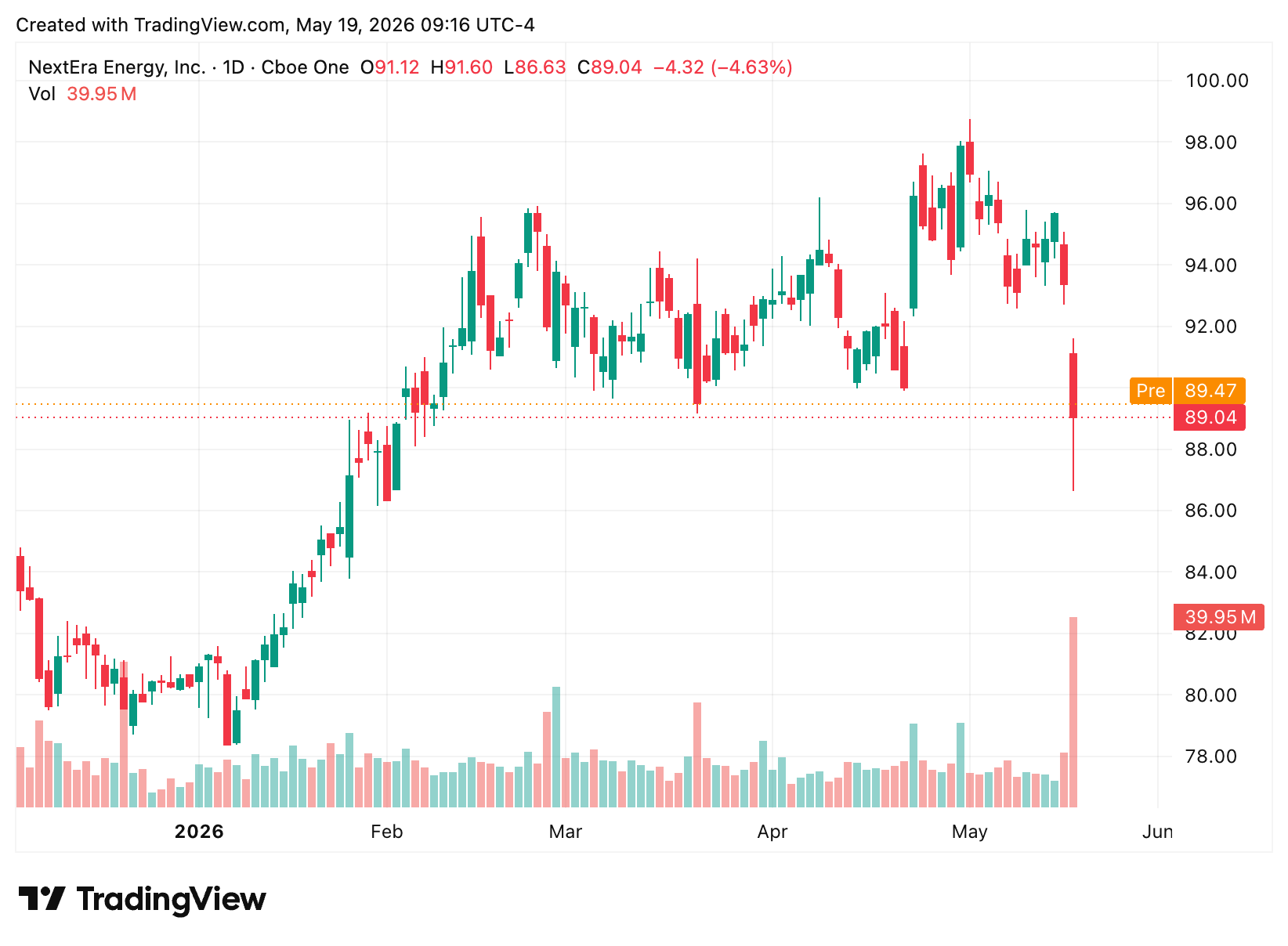
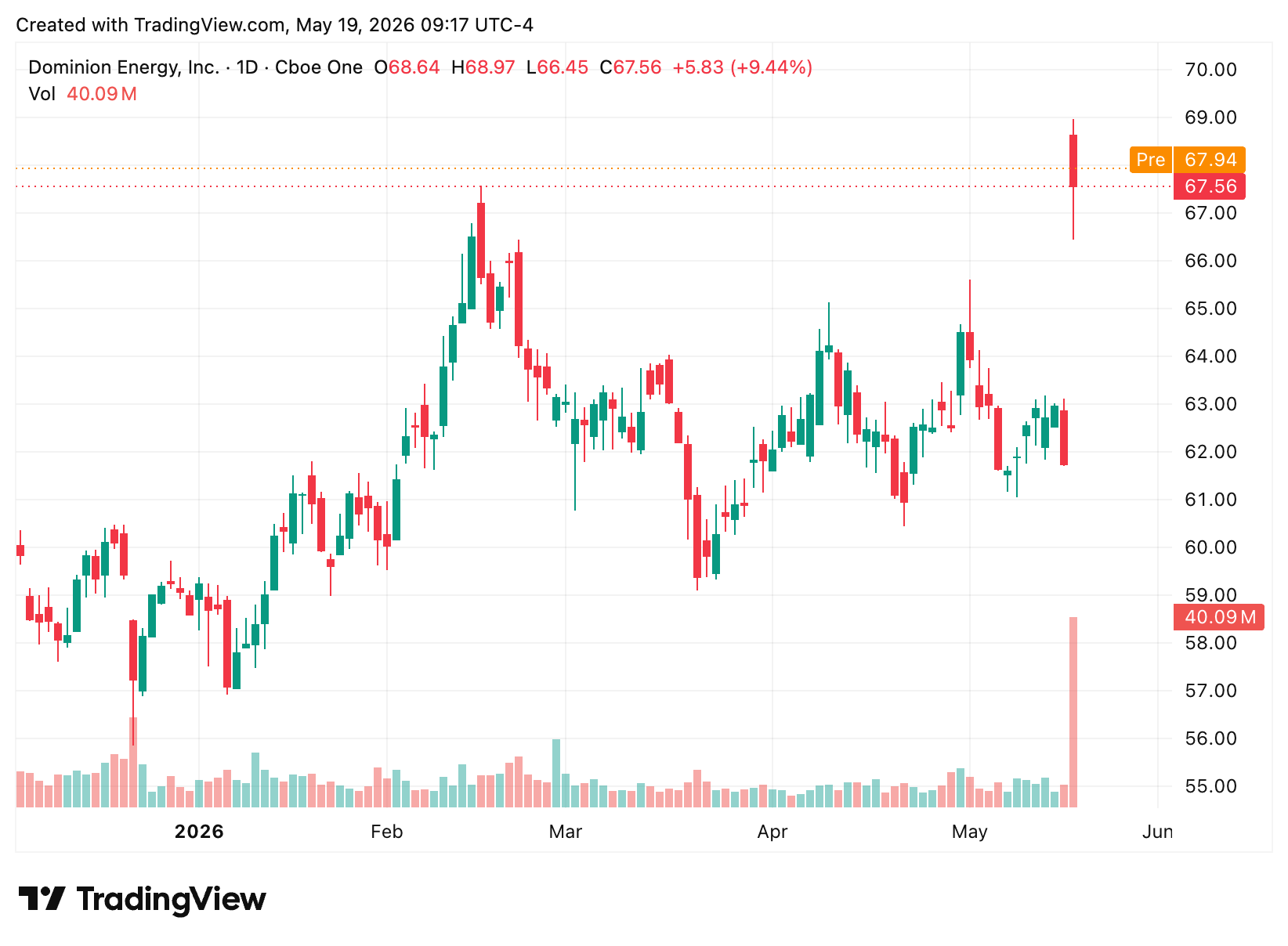
The proposed merger between NextEra Energy and Dominion Energy is being described in the language of scale, efficiency, affordability, and growth. I’ve discussed how this is the vocabulary that announcements of new data centers and corporate consolidation almost always use. The companies say the combined utility would serve around 10 million customer accounts across Florida, Virginia, North Carolina, and here in South Carolina (mostly the Lowcountry, dealing with its own slew of data center proposals in rural counties along with development pressure on areas such as St. Helena and the areas inhabited by Gullah-Geechee but also the Columbia metro area), with 110 gigawatts of generation and more than 80 percent of its operations in regulated utilities. Dominion shareholders would receive NextEra stock, NextEra shareholders would own most of the combined company, and customers in Virginia, North Carolina, and South Carolina would receive proposed bill credits after closing. The deal is valued at roughly $67 billion and still needs shareholder and regulatory approval.
For those of us living outside of Dominion’s footprint here in the Carolina Piedmont, this isn’t only a business story, but is also a landscape story.
The story here is one about rivers, substations, transmission corridors, forests, county councils, ratepayers, server farms, and the strange new moral geography of artificial intelligence. I’ve often written here that we dress up these stories in other vocabularies, but they are often ecological and perceptual at heart. Ultimately, this is a story about attention and what we are asked to notice, what we are encouraged to ignore, and what gets hidden inside the smooth language of “energy demand.”
The timing isn’t accidental. Electricity demand in the United States has begun rising after years of relative flatness, and much of the current surge is tied to data centers, artificial intelligence, cloud computing, and the broader digital infrastructure that now underwrites ordinary life. Reuters describes the deal as part of a broader utility response to the energy needs of AI-driven data centers, especially across the Southeast and the PJM Interconnection region. Dominion is already deeply entangled in this context through Virginia’s “Data Center Alley,” while Florida-based NextEra brings enormous generation and development capacity.
Dominion is part of the state's physical and political ecology after it purchased the ash remains of SCANA when it spectacularly failed to complete the VC Summer Nuclear facility in Fairfield County (earthquake-prone, btw) in the 2010s, which led to significant political fallout. The merger materials specifically name Dominion’s existing operational headquarters in Cayce, South Carolina, as part of the future structure of the combined company, and Dominion’s own merger page says customers in Virginia, North Carolina, and South Carolina would receive $2.25 billion in bill credits spread over two years after closing.
So while the headlines may point to Wall Street, Florida, Virginia, or the enormous buildout of AI infrastructure, this story has a Carolina address.
Here in Spartanburg, we have already been learning how to read these stories. Project Spero, the failed AI data center development at the Tyger River Industrial Park, has made clear how quickly “the cloud” comes down to earth. What appears in national conversation as artificial intelligence or digital transformation arrives locally as land use, megawatts, water, tax agreements, transmission capacity, public secrecy, and unanswered questions about who benefits and who pays. The vocabulary of innovation often comes first, and the material accounting comes later.
Project Spero and Spartanburg’s New Resource Question

Spartanburg County is staring straight at the kind of development that sounds abstract until it lands on our own roads, substations, and watersheds. A proposed $3 billion, “AI-focused high-performance computing” facility, Project Spero, has been announced for the
This is why the NextEra-Dominion deal feels important beyond the business pages. It isn’t that one large utility may absorb another (although that is certainly worthy of attention and scrutiny in our current economic context). The energy system is reorganizing itself around the demands of computational scale, and the electrical grid is being asked to serve a new geography of artificial intelligence. That shift won’t happen in some invisible digital realm, but across watersheds, neighborhoods, rural corridors, industrial parks, and monthly power bills.
Vocabulary like “large-load opportunity” sounds sterile, almost harmless. But a large load is never only a number on an investor slide. Instead, it’s a claim placed somewhere. That vocabulary requires a river, a right-of-way, a cleared site, a substation, a financing structure, regulatory approval, and a community that understands future growth as a good in itself. Sometimes that growth may bring real benefits. But even then, it’s not weightless or “in the cloud.” The more our economy depends on computational scale, the more we need to learn how to see the physical forms beneath the digital promises.
The more I work on my PhD in ecology, spirituality, and religion, the less convinced I am that our central crisis is only one of bad technology or insufficient regulation. Underneath them is a perceptual crisis. We have built systems that train us not to see the relations that sustain us. We see the app but not the power plant, while we see the chatbot but not the water withdrawal. We hear the vocabulary of a corporate announcement but not the watershed. We see “the grid,” but not the living land through which it passes.
This is where phenomenology becomes more than an academic discipline for me. To attend to the world is not simply to think harder about it. Allowing the world to show itself again beneath the layers of convenience and abstraction is to pause before the phrase “energy demand” and ask, “Whose demand, for what purpose, at whose cost, and in what place?”
How Much Energy Does a Life Require?

This question has been at the top of my mind for the last few weeks (waves hand in the air with everything going on), and I’ve gone in many different directions with possible responses. There is a chart I’ve come across from ourworldindata that, at first glance, looks like a fairly standard data visualization. A handful of lines moving across a timeline…
The merger announcement says the combined company will help meet rising demand while keeping bills affordable. That’s the promise, as we are all comforted by the vocabulary of “affordability” in a time of economic instability and rising energy prices, due to factors that feel beyond ordinary citizens’ power to control. Families are already feeling the strain of utility bills here in South Carolina. Energy poverty is real and a growing concern for our communities. No serious ecological policy can ignore the burden placed on households when infrastructure decisions are made far above them. The Associated Press notes that the merger arrives amid public and political concern about rising electricity bills and rate hikes across several states.
But affordability cannot be reduced to a temporary bill credit of a couple of hundred dollars, either. A two-year credit may soften the political edge of a merger, but it doesn’t answer the deeper question of what kind of energy future is being built. If the grid is expanded primarily to meet massive computational demand, ordinary customers may still find themselves living in an infrastructural vocabulary designed around someone else’s priorities. The bill may arrive at the mailbox, but the real costs are distributed across air, water, land, and public power.
That phrase, public power, is interesting when the utilities themselves are investor-owned. Electricity isn’t a luxury good in the ordinary sense, but a condition of modern life. Electricity shapes health, education, food storage, communication, heating, cooling, work, and care. Because of that, utilities occupy a strange moral space in my opinion. They are “corporations,” but they also govern possibility. They decide, often alongside regulators and political bodies, what kinds of futures become materially available.
So when a utility grows larger, the question is not only whether it can finance more projects efficiently, but also whether it can do so in a way that supports its mission. The question is also whether communities will have any meaningful say in the future being built around them.
A Moment of Civic Attention in Spartanburg

Over the last few months, something unusual happened here in Spartanburg. For a brief moment, a large number of people began paying close attention to something that usually remains invisible... the infrastructure that quietly shapes daily life. Water systems, electrical capacity, land use, and industrial development. The complicated negotiations betwee…
In South Carolina, we should be especially attentive to this. Our state has long been treated as a place where infrastructure can be routed, land can be made available, and energy-intensive development can be welcomed in the name of jobs and growth. Sometimes those promises are real. Sometimes they are thin. But they always deserve public scrutiny, especially when projects are wrapped in the language of inevitability.
Artificial intelligence is often presented as inevitable. Data center growth is presented as inevitable if we are to “beat” China in some Strangelovian drama in the vocabulary of “winning.” Rising electricity demand is presented as inevitable because progress is depicted as always linear. Utility consolidation is presented as the rational response to the inevitability of efficiency. However, inevitability is often just power speaking in a calm voice, using the vocabulary of placation, when an issue is in the news cycle.
Ecology teaches a different grammar. Nothing arrives without relation, and nothing scales without consequence. The immaterial vocabulary of “grid,” “cloud-based,” or “closed-cycle” doesn’t apply. The cloud is not in the sky, but it’s in the watershed. It is in the copper, concrete, steel, gas turbine, solar array, battery field, transmission line, and rate case. In this way, it is in the political economy of places like Virginia, Florida, North Carolina, and South Carolina.
And relation is here, in the ordinary landscapes we are tempted to overlook, that the spiritual question emerges.
What kind of intelligence requires us to become less attentive to the world?
That’s the question I keep returning to in my writings here and in my research. I am not against technology or artificial intelligence, much to the chagrin of one of my gurus, Wendell Berry. That’s because I don’t want to romanticize some imagined past before electricity or computation. But any intelligence worthy of that vocabulary term should deepen our perception of relation, not flatten it. It should help us become more accountable to the land, not more skilled at hiding extraction behind abstraction.
There is an old theological temptation to treat the spirit as an escape from matter so that our true selves can either float up to play a harp on a cloud for eternity or ascend to the higher gnostic or docetic realms of being. Much of my own work pushes in the opposite direction. The spiritual isn’t what floats above the material. The spiritual is the depth of relation within the material. It is the more-than-human communion that becomes visible when we stop treating the world as an object and “resource” for our projects. Trees, rivers, soils, power lines, homes, cooling systems, and human bodies all belong to the same field of consequence and consciousness.
This is why a utility merger is so fascinating to me.
Ecology is not only about forests, birds, and rivers. Ecology is about the pattern of relations that makes life possible (the name comes from the Greek terms indicating a “Study of the Home,” after all… where we belong). A merger of this size alters the pattern and shifts leverage. A business merger, in the vocabulary of such transactions, changes how energy futures are financed. It changes the scale at which decisions are imagined. The distance between a household in Spartanburg and the boardrooms where the future of the grid is being described as an opportunity is altered.
What is Ecology?

My PhD work at CIIS is in Ecology, Spirituality, and Religion (and my dissertation is on what I call the Ecology of the Cross).
The work before us is not simply to oppose or accept, but our work is to perceive differently.
We do need to ask what this merger means for South Carolina ratepayers. We also need to ask which new generations will be built and where. We should ask how much of the new load is driven by public need and how much by private computational expansion. We must ask what data center growth will require from our rivers and our rural counties… whether regulators will treat ecological cost as central or peripheral. We need to ask whether local communities will be invited into real decision-making or merely informed after the terms have already been set.
Most of all, we need to refuse the convenience of invisibility.
The grid is not elsewhere. The cloud is not elsewhere. The future is not elsewhere. The future, past, and present are here, in the Piedmont, in the hum of wires after dark, in the cleared lots at the edge of town, in the rivers whose names we forget until someone wants to use them, in the monthly bill on the kitchen counter, in the language of economic development, and in the habits of attention we either cultivate or surrender. Just as it is in Dominion’s vocabulary of “footprint” in the Lowcountry and Midlands (interesting that we use the term “footprint” for such discussions, isn’t it?).
The proposed NextEra-Dominion merger may become one of the largest utility deals in history. But its meaning will not be found only in market capitalization or shareholder ratios. Rather, that meaning will be found in how it reshapes the conditions of life and ecology across actual places. Including this one.
And that means we should pay attention before the deal becomes another fact of the landscape and learn to perceive the vocabularies meant to shape our consciousness and our ecologies.
🙏🏼Sam🙏🏼