


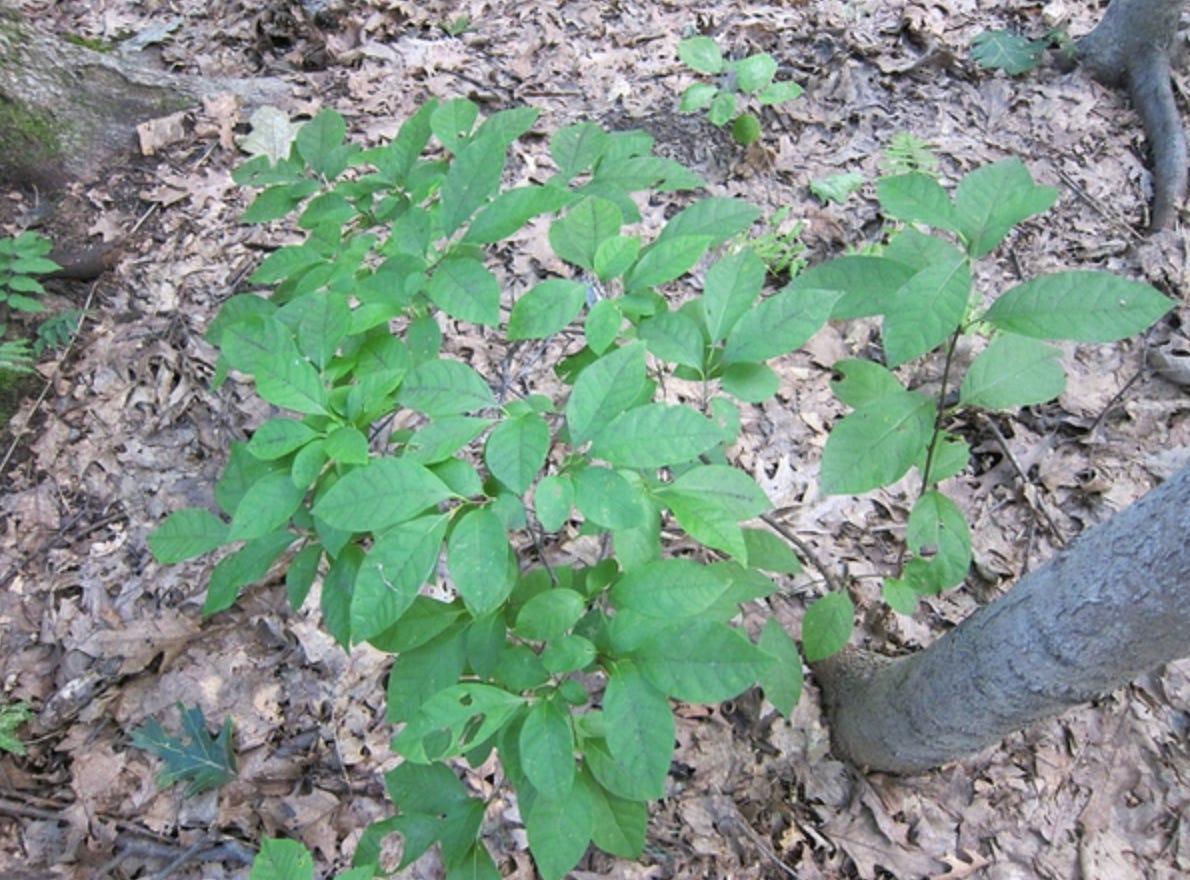
I noticed a spicebush at the edge of the trail that you would walk past without noticing if you were moving at the pace most of us move. It is not large. It does not announce itself. But in late April in the South Carolina Piedmont, Lindera benzoin is already fully leafed and carrying its small yellow-green flower clusters before most of the canopy has committed to anything, and if you stop long enough to look at it, something accumulates that is difficult to name without either flattening it or overstating it. The shrub is doing something. Not responding to stimuli or executing a program, but it’s doing something by pressing its particular form of life into the available light with a specificity that belongs to it and not to the general category of plants-in-spring.
This is the thing the Piedmont forest keeps trying to tell us if we slow down enough to hear it. Instead of a lesson, or a moral, it’s something more like a disclosure, the way a place reveals itself when you stay with it rather than pass through it.
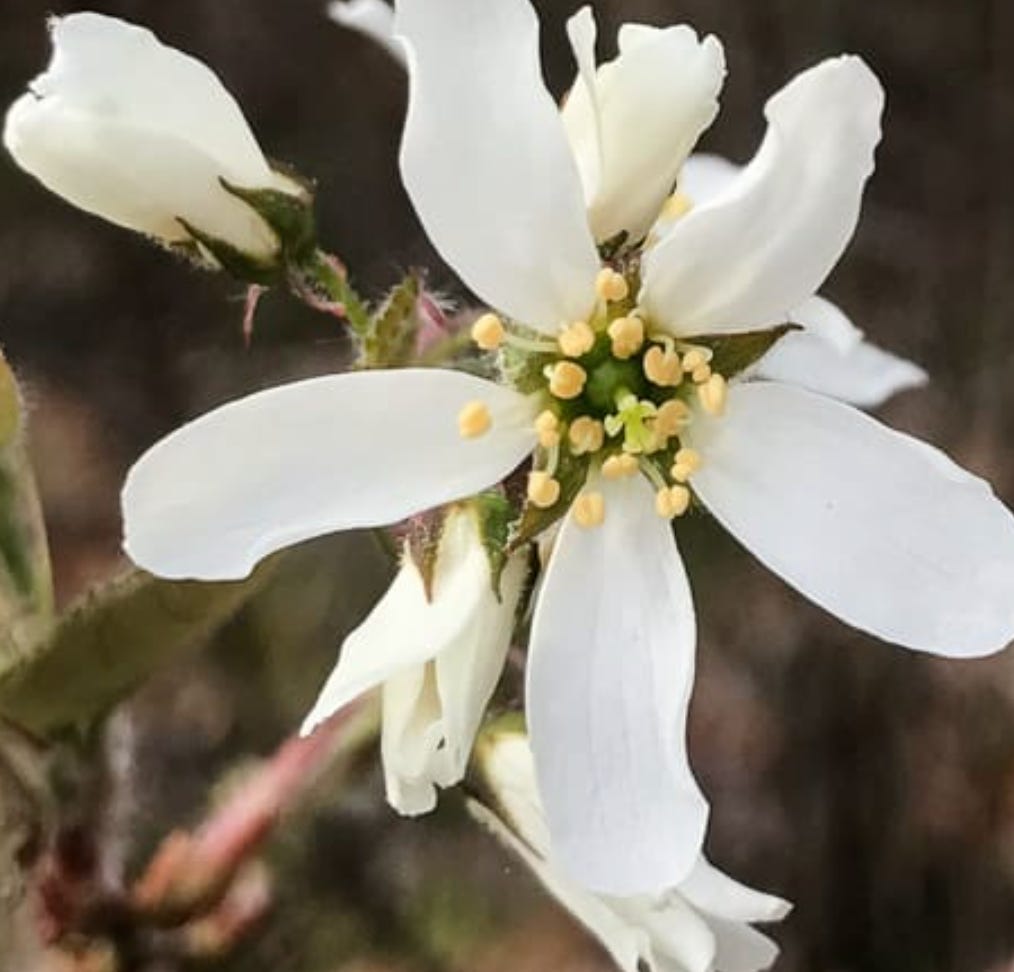
The understory moves first. While the oaks and tulip poplars are still reading the light and the soil temperature, still holding their own counsel about whether spring has actually arrived, the spicebush and the serviceberry and the redbud have already made their commitment. Amelanchier arborea, the serviceberry, blooms so early and so briefly that most people miss it entirely, those white flowers appearing in the gray weeks before the canopy leafs out, pollinated and gone before the forest fills in above. Bloodroot pushes through the leaf litter with its flower already formed inside a curled leaf, carrying its own opening within it, the whole sequence of emergence already organized from within before any of it is visible from outside. There is something worth pausing on in that, in the way the bloodroot’s development is not assembled from the outside in but expressed from the inside out, oriented toward a form it is already, in some sense, becoming.
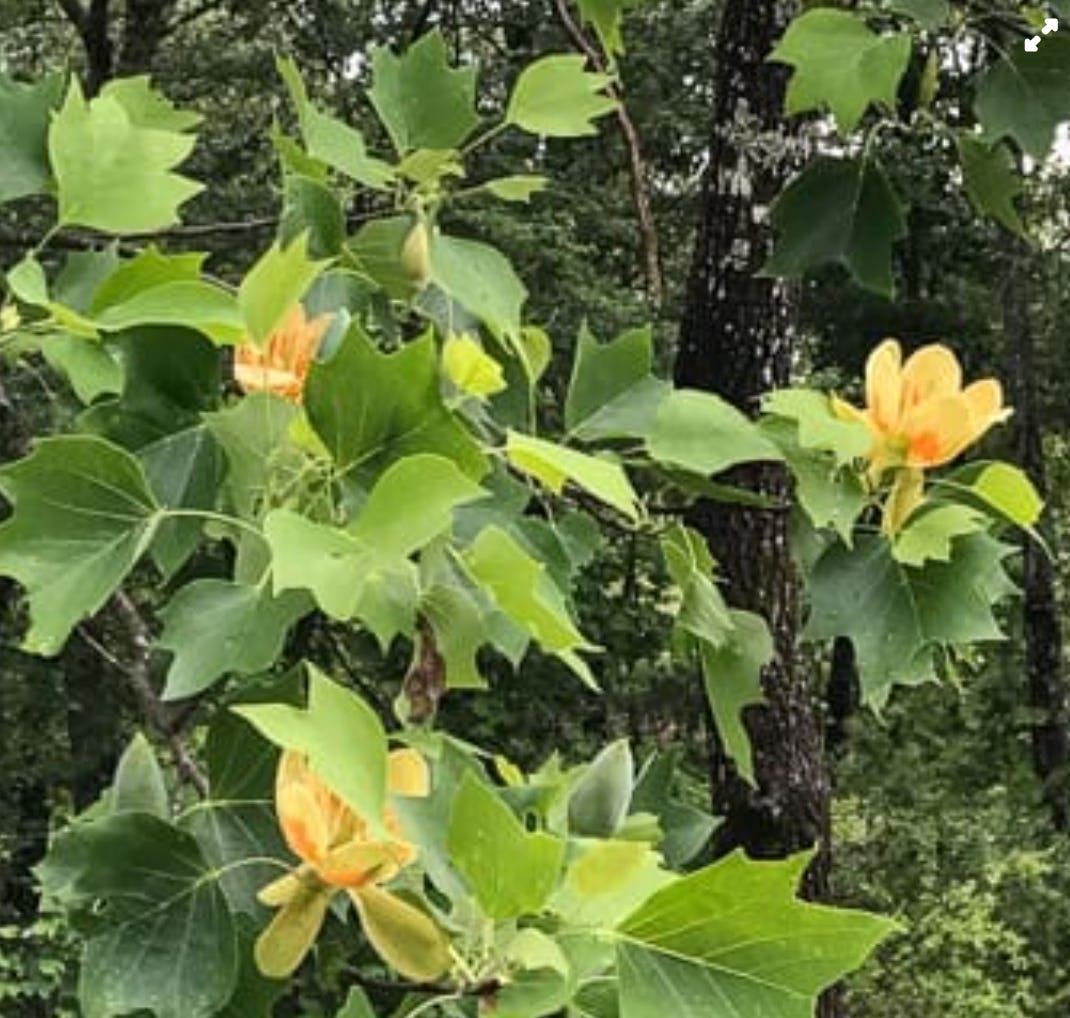
By the time the tulip poplars are fully committed, the forest has become something different from what it was in March. Liriodendron tulipifera is a signature tree of the Piedmont canopy, the one that tells you where you are, and in late April those big distinctive leaves are unfurling with a kind of urgency that the botanists will tell you is about light capture and competition and the math and physics of photosynthesis. All of that is certainly true. But something is also happening that the math of photosynthesis does not quite account for, which is that each tulip poplar is doing this in a way that is recognizably its own, asserting its form into the space available to it in the way that a century of growth on that particular slope with that particular soil and aspect and water table has made possible. The tree is definitely not a mechanism running a program. It is a history organizing itself forward into a present, carrying everything it has been into everything it is becoming by eating light and transferring that to energy.
Richard Powers understood something about this in The Overstory, which is the rare novel that manages to take trees seriously as something more than scenery without losing the reader in abstraction. What his characters keep discovering, each in their own way and often too late, is that the forest has been communicating all along, that what they took for silence or indifference was actually a form of expression they had not learned to receive. The mycorrhizal networks, the chemical signaling, the way a chestnut oak on a dry ridge holds its leaves longer into autumn than the same species in a wetter hollow... none of this is metaphor. It is the forest being specifically, irreducibly itself, and the question the novel keeps asking is whether we have the perceptual equipment to receive it.
That question isn’t rhetorical. There are permits being processed right now in the Carolina Piedmont for data center infrastructure that will draw from the same aquifer and the same electrical grid that the forest depends on, developments that are moving forward because the people making the decisions have access to impact assessments and growth projections and demand forecasts, and all of those are real, and none of them requires anyone to have spent twenty minutes watching a spicebush in April. The failure is not primarily a failure of regulation, though it may become that too. It is a failure of attention, a trained incapacity to receive what the living system actually discloses when you stand still long enough for it to disclose anything.
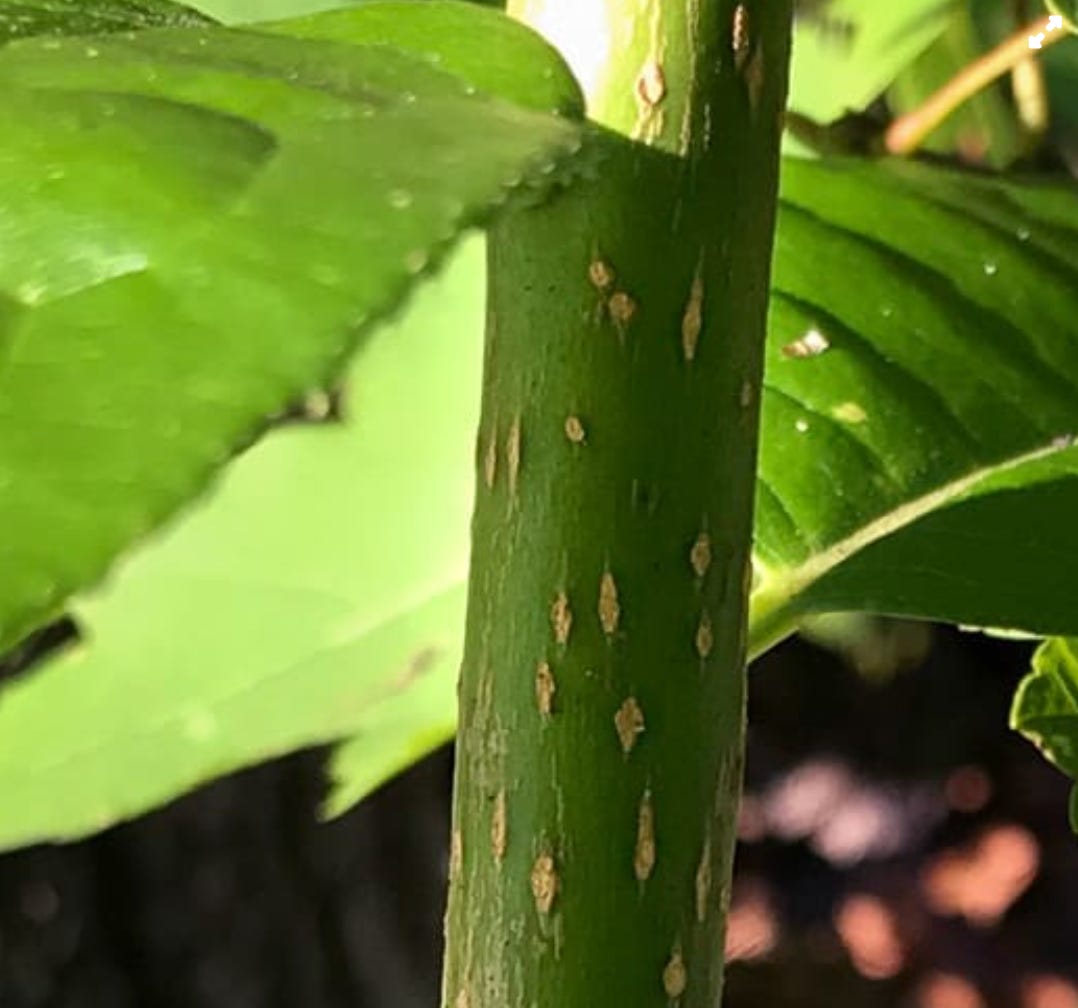
The sourwood will bloom in July, those long racemes of white flowers that make the tree look like it is trailing something behind it, and the bees in the Piedmont know exactly what to do with that, and the sourwood honey is a consequence of a relationship that has been developing between Oxydendrum arboreum and its pollinators for longer than the category of management has existed. By late October the sourwood leaves will be the deepest red in the forest, a red that seems almost aggressive in its specificity, as if the tree is insisting on being seen before the winter closes in.
This is what the forest keeps doing, in every season and at every scale from the bloodroot’s single spring flower to the tulip poplar’s century of canopy presence and insisting on its own form of life, pressing its own particular interiority into the world, being, as precisely and as persistently as the conditions allow, itself.
The philosophical name for this is what I call ecological intentionality in my work as an idea that what we call interiority is not a property belonging exclusively to human consciousness but a structural feature of living form as such, the way organisms participate in and disclose meaningful worlds through their own modes of growth and activity. But you do not need the philosophical name to feel the weight of what the spicebush is doing at the edge of the trail. You need to stop, and stay stopped, and let attention do what attention does when it is patient enough... which is to receive, rather than project, what is genuinely there.
The forest has been disclosing itself for a long time. The question is whether we are learning to listen.