


Something remarkable happened here in Spartanburg this past week. After months of debate, public meetings, and growing resident concern, the developers of the proposed Project Spero AI data center withdrew it. The company simply said, “Alignment ultimately has not been achieved.” Corporate language has a way of smoothing the edges of conflict, but the meaning here is not difficult to read. The community began asking questions, and those questions changed the story.
Over the past months, many of us in Spartanburg began focusing less on the polished language that accompanies projects like this, words such as “innovation,” “investment,” and “economic development,” and more on the physical realities beneath the proposal. Water withdrawals, electricity demand, infrastructure strain, and long-term ecological impacts slowly entered the conversation. Once those realities became visible, the narrative began to shift. What had initially been presented as an inevitable step forward for economic growth began to look more complicated. Projects of this scale rely on momentum, and momentum depends heavily on public perception. When perception changes, momentum slows.
That shift in perception did not come from any single person or group. It emerged through conversations, public meetings, local reporting, and the steady work of people simply asking better questions. What began as curiosity gradually became scrutiny, and scrutiny eventually became hesitation among local leaders who realized that the community was no longer convinced that the project’s benefits clearly outweighed its risks.
Now a similar conversation is beginning to unfold elsewhere in South Carolina, including a place that is very personal to me.
Marion County and the Expansion of AI Infrastructure
In Marion County (where I grew up in Mullins), another major data-center proposal has appeared on the landscape. According to reporting from the Post and Courier, developers have proposed a facility associated with Stream Data Centers that would bring a large-scale digital infrastructure project to the region. For many residents, the announcement came quickly, and questions about the project’s scope and long-term impact began surfacing almost immediately.
For rural communities, projects like this can arrive with a sense of inevitability. The promise of economic development, construction jobs, and tax revenue often accompanies announcements of new industrial infrastructure. Yet residents in Marion County have already begun raising concerns about the speed of the process and the lack of clear public information about the project’s environmental demands. These concerns are not rooted in opposition to technology or economic growth. Rather, they reflect a deeper question that rural communities across the country are beginning to ask: what does this kind of infrastructure actually require from the land and water systems that sustain the communities where it is built?
That question becomes particularly important when the proposed infrastructure is designed to support artificial intelligence systems that require enormous computing power. Data centers are not abstract digital clouds floating somewhere beyond the horizon. They are intensely physical systems that depend on massive flows of electricity, water, and cooling infrastructure. The sleek digital services they support are grounded in very real ecological and material demands.
Why Rural Communities Are Being Targeted
Across the United States, large technology companies are increasingly looking to rural regions as potential sites for data center expansion. Several factors make these areas attractive. Rural counties often have large tracts of available land, proximity to high-capacity power transmission lines, and fewer zoning restrictions than major metropolitan areas. Local governments may also see such projects as opportunities to attract investment in regions that have struggled economically for decades.
Yet these same conditions can create vulnerabilities. Smaller local governments may have fewer resources available to evaluate the long-term environmental and infrastructural consequences of major industrial projects. Residents may not initially have access to the technical information needed to fully understand the scale of resource consumption involved. As a result, communities can find themselves navigating decisions that will shape their landscapes and water systems for generations with limited time and incomplete information.
This is why the conversation around data centers is beginning to shift nationally. Researchers and policymakers are increasingly acknowledging that the rapid growth of artificial intelligence and cloud computing infrastructure is placing new demands on electricity grids and freshwater systems. These facilities require enormous energy inputs and significant water use for cooling processes, particularly in warmer climates. In regions where water resources are already under pressure from agriculture, drought, or population growth, those demands can become a critical factor in long-term planning.
The Real Resource Question: Water
When development projects are introduced to communities, the conversation often begins with jobs, investment, and economic opportunity. Those questions are important and deserve careful consideration. But in many cases they are not the most fundamental questions communities should be asking.
The most important question is water.
Freshwater is not simply another economic resource that can be substituted or relocated once it is depleted. It is the foundation of ecosystems, agriculture, and community survival. Rural landscapes like those in the Pee Dee region are shaped by the rhythms of rivers, wetlands, rainfall, and soil. Decisions about large-scale industrial water use can alter those systems in ways that persist long after the original economic promises have faded.
This is precisely why the conversation in Spartanburg shifted so dramatically once residents began focusing on water. People began asking straightforward but essential questions. How much water will the facility require each day? Where will that water come from? What happens during periods of drought? And who ultimately decides how water is allocated when industrial demand begins competing with agriculture, ecosystems, and residential use?
Once those questions entered the public conversation, the entire narrative changed. The project was no longer simply about economic opportunity. It became a discussion about long-term stewardship of shared ecological resources.
The Power of Perception
The most important lesson from the Project Spero debate is not simply that a data center proposal stalled. The deeper lesson is that perception changed. For generations many rural communities have been encouraged to see development as something that happens to them rather than something they actively shape. A corporation proposes a project, local officials negotiate incentives, and construction begins.
But communities are beginning to recognize that they have agency within these processes. They can ask questions. They can demand transparency. They can insist that decisions about land and water reflect the long-term well-being of the people who live there rather than the short-term interests of outside investors.
In Spartanburg, that shift in perception slowed the momentum that large infrastructure projects typically rely on. When residents began reframing the conversation around water, energy, and ecological responsibility rather than simply economic development, the project’s assumptions became less stable. Local leaders recognized that the community wanted more clarity and accountability before moving forward. In that space of uncertainty, the project lost its footing.
Rural South Carolina Deserves a Voice
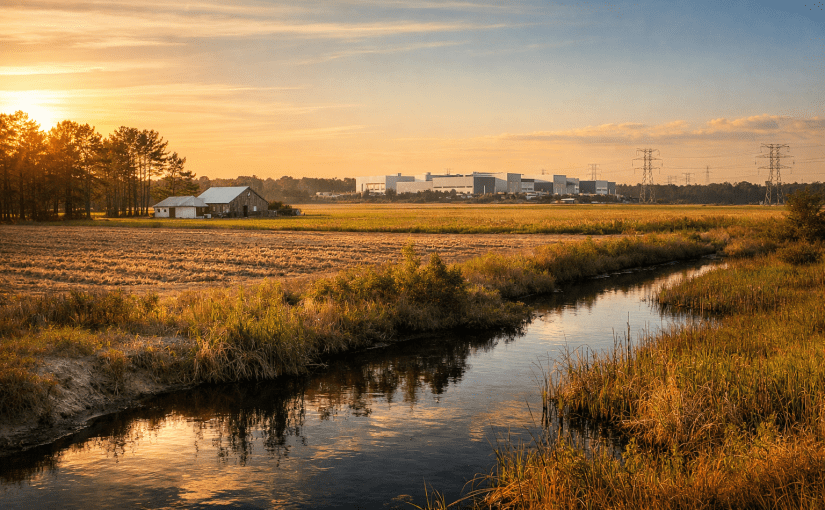
The situation unfolding in Marion County deserves careful attention. Mullins and the surrounding Pee Dee region are not empty spaces waiting to be filled by industrial infrastructure. They are landscapes shaped by agriculture, rivers, forests, and generations of families who have built their lives there.
I grew up in Mullins. I know the fields, the creeks, and the quiet roads that run through that part of the state. Those landscapes carry histories that stretch far beyond the timelines of corporate development proposals.
Communities across rural South Carolina deserve the opportunity to decide what happens to their land and water. That does not mean rejecting every form of development. It means ensuring that decisions about the future of these landscapes are made with full transparency, careful ecological consideration, and meaningful public participation.
The story that has unfolded here in Spartanburg shows that communities are not powerless when they begin asking the right questions. Sometimes the most important shift begins not with a protest or a vote but with a change in how people see the land and water around them. When perception changes, the conversation changes, and once the conversation changes, the future becomes something communities can shape rather than simply accept.
What Marion County Residents Can Do Now
People in Marion County have already begun asking what they can do as conversations about the proposed data center continue. The experience in Spartanburg offers a few practical lessons.
The first step is simply paying attention to water. Large data centers depend on enormous volumes of water for cooling systems. Residents should ask local officials clear questions about how much water the facility would require, where that water would come from, and what contingency plans exist during drought conditions. Water withdrawals, discharge permits, and cooling systems are often where the most important long-term impacts appear.
Second, transparency matters. Many large development projects involve non-disclosure agreements between companies and local governments during early negotiations. While that is common in economic development deals, it can also leave communities without the information they need to understand what is being proposed. Residents have the right to ask for clear information about energy use, water demand, tax incentives, and infrastructure commitments before major decisions are finalized.
Third, local meetings matter more than most people realize. County council meetings, zoning hearings, and planning commission sessions are often where the most significant decisions take place. Even a small number of residents asking informed questions can dramatically change the tone of those discussions.
Finally, it helps to change the conversation itself. When discussions focus only on jobs or tax incentives, communities can feel pressured to accept projects quickly. When the conversation includes water rights, long-term land stewardship, and ecological responsibility, the decision becomes more balanced and thoughtful.
The lesson from Spartanburg is simple. Communities are not powerless when they begin asking better questions.