


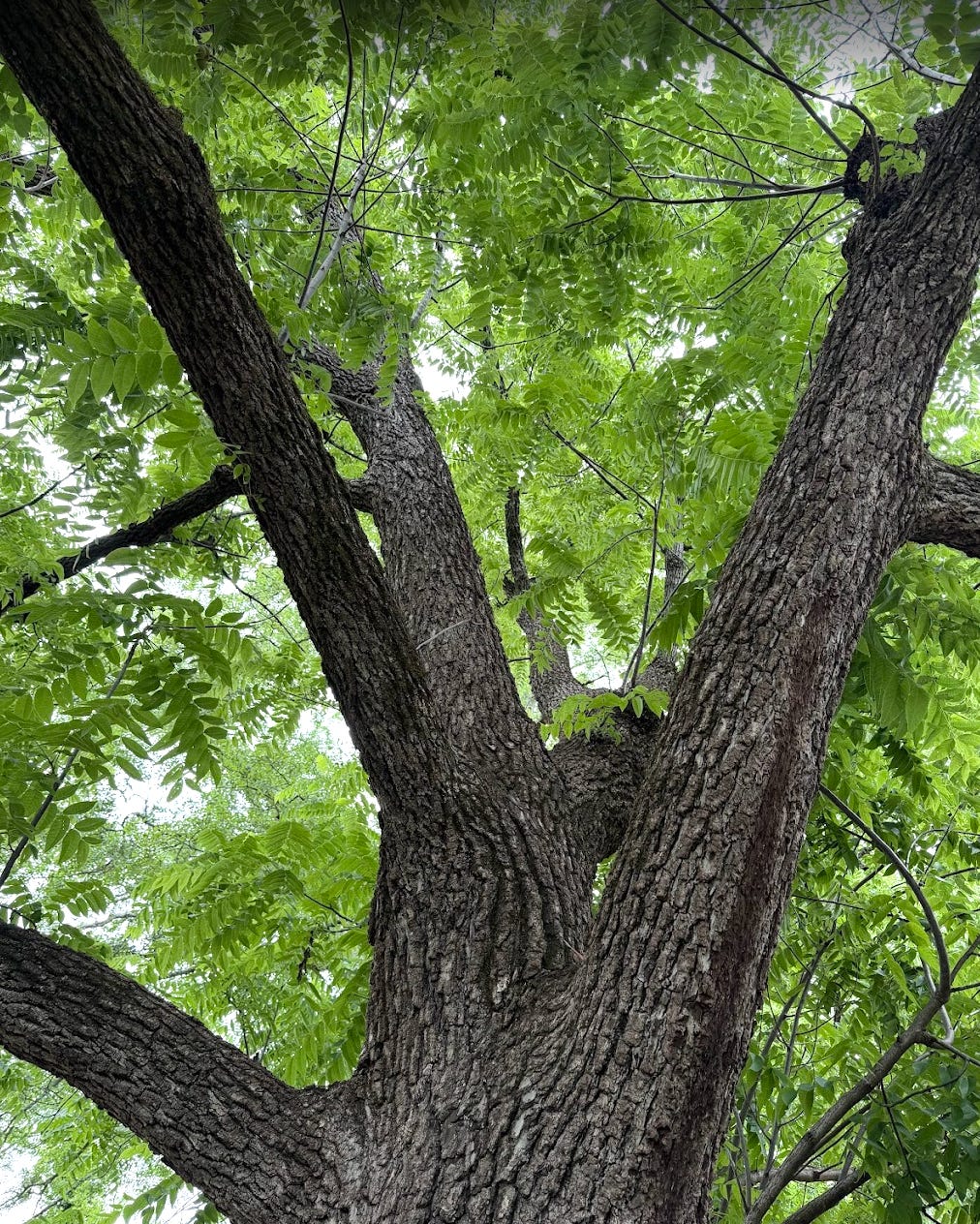
The black walnut in our backyard has fully leafed out again, and I celebrated its feat this afternoon while working in the yard alongside it after morning meditation on writing here for a year. It is one of the last trees in the yard to do it, holding back through April while the maples and the oaks rush ahead, and then opening all at once into that high green canopy that throws the back of the house into shade by the first week of June. A year ago, I was standing under it more or less where I am standing now, and Carolina Ecology was a few days old... a handful of posts in my head with a catchy domain name, an idea I was not yet sure how to keep.
The first real essay went up on the fifth of June last year, and it was about forever chemicals and the water of the Carolinas. I did not plan for water to become the spine of the whole year, but it did. The Pacolet and Lawson’s Fork, the shoals that hold the memory of how this land was once tended, the question of how many gallons a day a data center will draw from a county that already worries about drought... the writing kept returning to water the way the walnut keeps returning to leaf, on its own schedule, without asking me.
What I set out to do was simple, and I think it has stayed simple. I wanted to look at particular places in the Piedmont, Midlands, Lowcountry, and Coastal regions of South Carolina closely enough that the looking became a practice, and then to write down what the looking gave me. Perception and empathy first, before ethics (to channel Edith Stein). The argument, if there is one, comes later and comes slower. A creek behind a dam. A tree being cut down on a street I drive every week. The soil under the pines that still remembers a forest no longer standing there.
The pieces that found the most readers this year surprised me, though looking back, I’m not sure they should have. They were the ones where attention met something happening right now, out in the open, while it could still be changed. “Project Spero and Spartanburg’s New Resource Question” and “A Moment of Civic Attention in Spartanburg” reached more people than anything else I wrote and evidently had some impact on County Council conversations that I won’t get into here, and “What East Main Street Is For” was not far behind.
Project Spero and Spartanburg’s New Resource Question

Spartanburg County is staring straight at the kind of development that sounds abstract until it lands on our own roads, substations, and watersheds. A proposed $3 billion, “AI-focused high-performance computing” facility, Project Spero, has been announced for the
People wanted, it turns out, to see their own place of Spartanburg described with care while a decision about that place was still being made. The data center coverage wasn’t just about the data center(s). It was about whether a community can perceive what it is being asked to give up before it has already given it away.
And then there were the quieter essays I am, privately, more attached to. “What the Soil Remembers” and “What the Shoal Remembers” carried readers I did not expect down into the long history under the surface of the watershed... the fire practices that kept this country open, the durée of a river that does not stop doing what it does. Those essays asked nothing urgent of anyone or of our community. They asked for a slower kind of looking. That they traveled as far as they did has been the year’s best encouragement.
What the Soil Remembers

There is a black walnut tree in the backyard of our house here in Spartanburg. Every September, it drops its fruit, and the thick green husks split open, staining the ground (and the fingers of our children) dark. The squirrels know the timing better than we do. The tree has been doing this longer than anyone on the street has been alive.
I certainly won’t pretend the number of views, clicks, or “engagement” is large. This is a small site about a small corner of regions that most people drive through without stopping if they’re not living here. But the essays have been opened and read several thousand times over the year, a great many of them in an email that lands in the morning, and a good number of you have stayed. I don’t take that lightly, either. Attention is the one resource I keep writing about as though it were scarce, and you have given me a year of yours.
So, the plan for the second year is the same as the first. Keep walking the Cottonwood Trail along the Fork. Keep watching the walnut do whatever it is that walnut trees do (still working on that). Keep describing what is here, in the Piedmont and the Pee Dee, as plainly and as patiently as I can manage, so that we might come to see these places clearly enough to love them well, and to keep them.
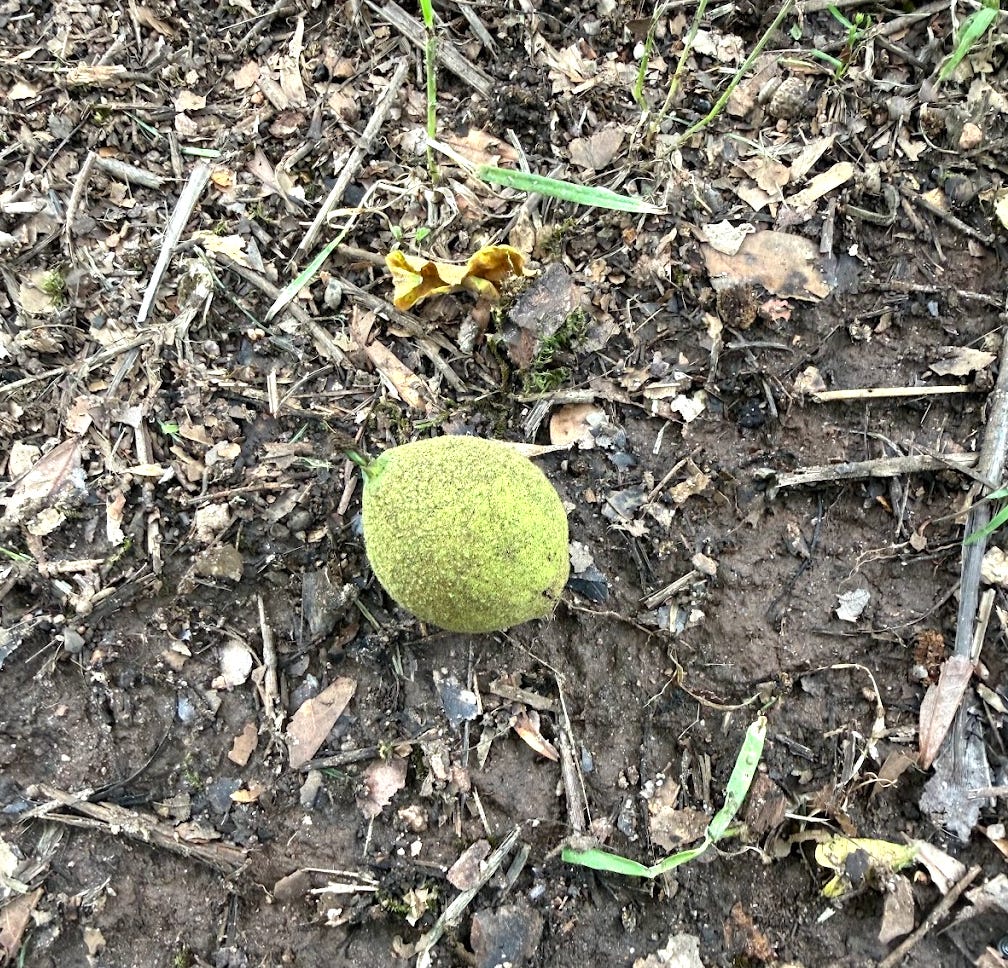
The walnut will drop its leaves early, the way it always does. By then, there should be another year of writing gathered under it.
Thank you for your attention to this matter.
This is the first time I’ve seen and read your post. Thank you. It is an easy read and talks about things we all should be paying much more attention to as we are only stewards of the earth.
Beautifully written. You speak for the rivers and the trees. That’s so important. Gratitude.